
Always free. Please consider donating to one of these: linktr.ee/jessdkant.
Content 100% always AI-free. While I talk about machine learning and LLMs, all content is human generated. Because why else would you waste your time?
trans rights, trauma, psychotherapy, and public health.

May I have your attention?
One of the more difficult to parse changes in the past few years as it pertains to tracking shifts in the news has been trying to find the line in the sand between what actually constitutes “news” and what is, for lack of a better way to say it, everything else. Social media has complicated this enormously. For however much it has empowered the average person, this capability is still largely dependent on infrastructure. Even when plausibly unintentional, our continued gamification of reality has unintended effects, and it renders most of the heuristics we use for determining the veracity of information fairly insolvent. This coincides with a global propaganda war waged on several fronts, using SEO, LLMs, and paid ads as weapons against minority groups with no social or economic capital with which to push back.
Welcome to the anti-trans outrage factory
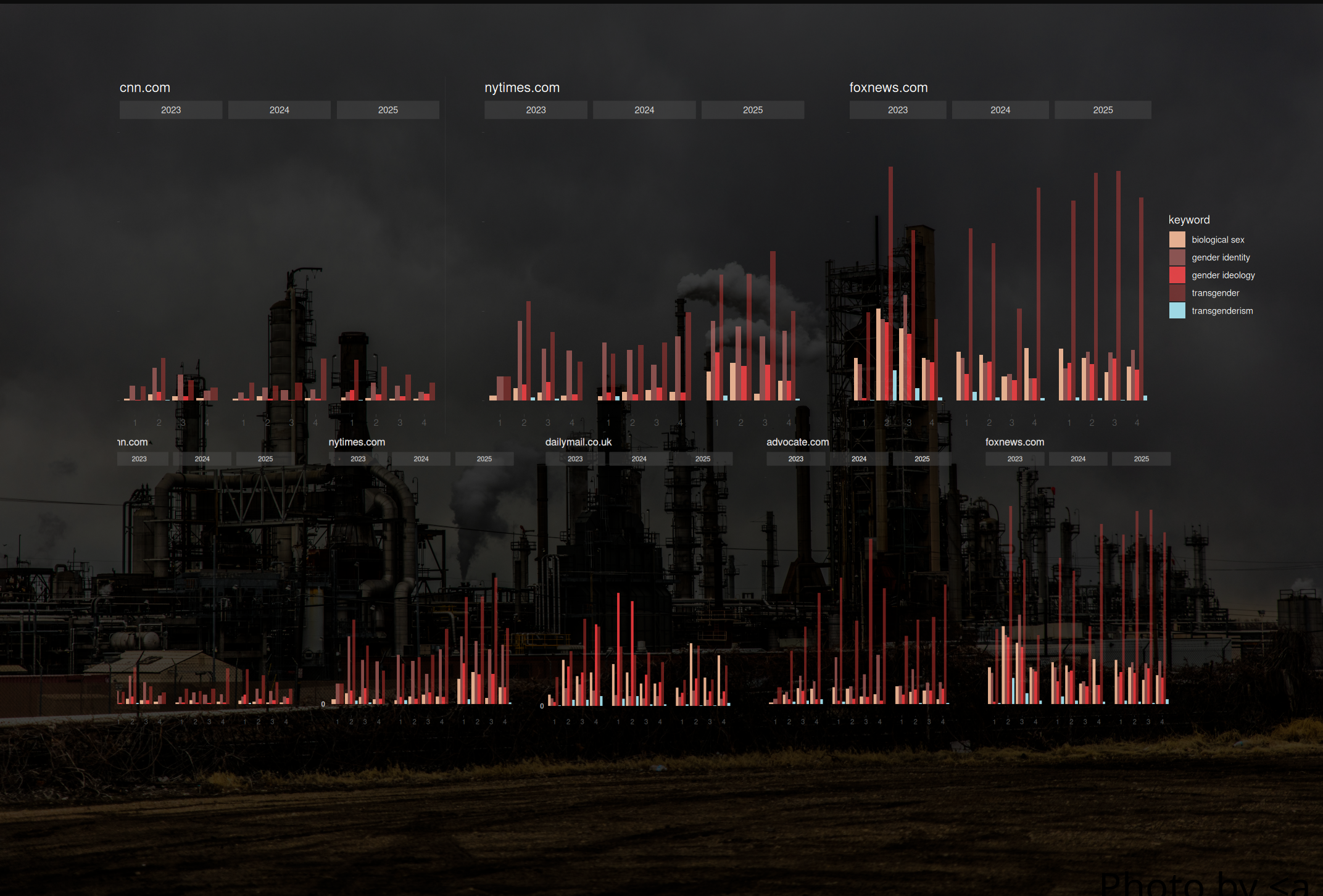
When I first wrote Anatomy of a moral panic in February 2024, I had only a faint glimmer of what was to come.The astronomical rise in stories about trans people that I’d collected over the previous year told a different story. This massive, messy dataset I had collected was brimming with increasingly vile discussions that only seemed to metastasize with time. 2023 was nothing compared to 2024, and 2025 showed no signs of slowing down. Two years later we know how the story turns out.

AI update: replication crisis
Regardless of who actually prints a story, it is the merger of social media and machine learning which increasingly drives narratives in the immediate wake of a major event. The next time a catastrophe happens anywhere in the world, look on Twitter and see how readily users defer to Grok, tagging the LLM bot into arguments to mediate disagreements on facts. Grok itself is simply deferring to the larger user base, however, and the answer it gives is dependent entirely on the amount of bullsh*t being pumped onto the website at any given time.

Disinformation in the era of generative AI
In the past two years, large language models have replaced traditional information search and delivery systems in increasingly jarring ways. As they become more integrated into our everday lives, it will likely become harder to distinguish fact from fiction. Simultaneously, corporations like Meta have moved away from efforts to stop misinformation under the thin guise of “free speech.” While this will be dangerous for everyone, it offers particularly worrying prospects for groups most routinely targeted by intentional disinformation efforts.
Hate in a post-information age
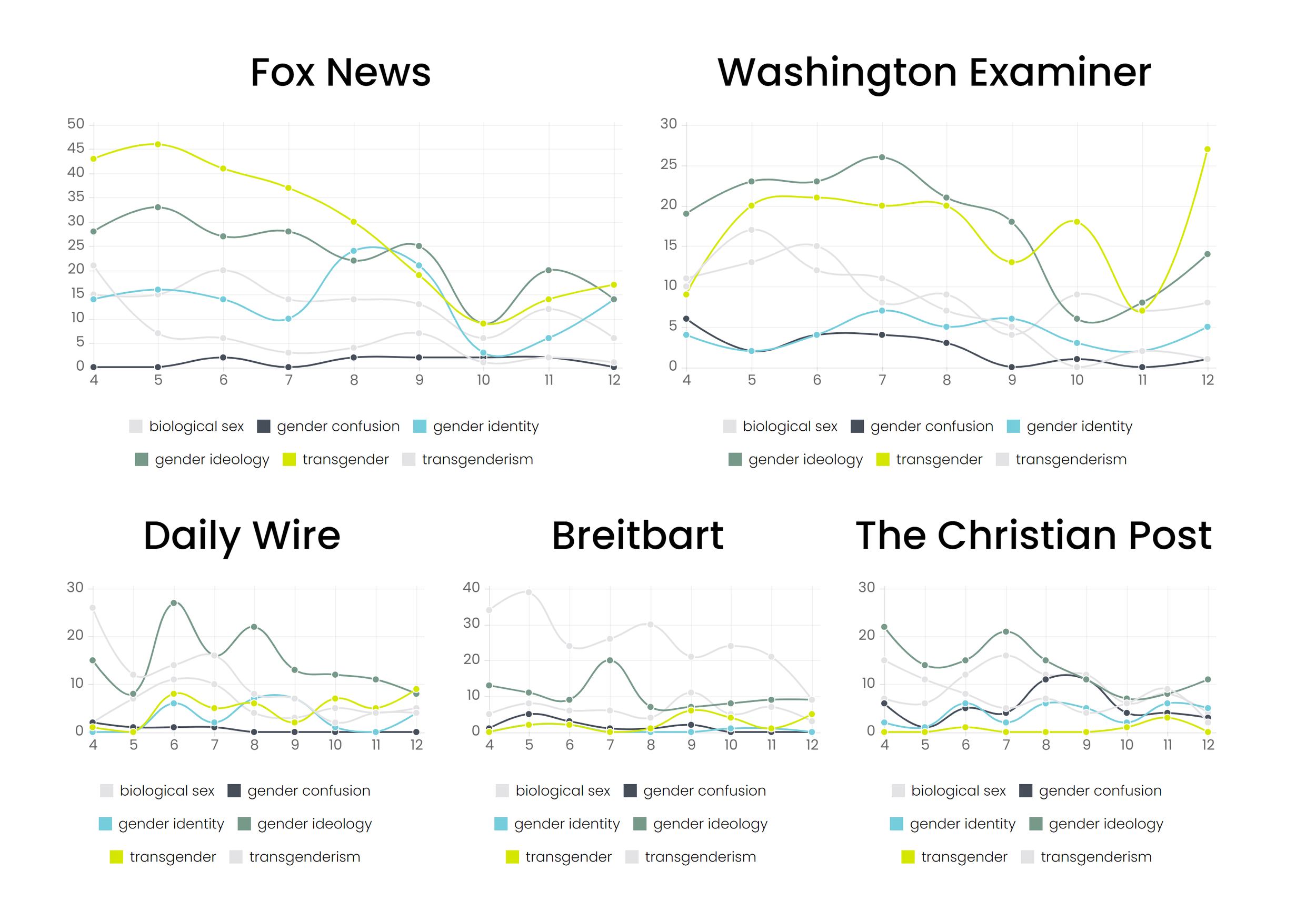
A week ago, I posted a dataset that had been compiling over the course of a year based on a series of RSS feeds I’d set up and mostly forgotten about. After merging the data and sifting through them, I find myself left with far more questions somehow than I had come in with. But most of all, what I can’t get out of my mind is the sheer volume of articles.
At first, I thought it was an artifact of the data collection process. Setting the alerts to any news article using the “as-it-happens” frequency setting means that the second Google indexes a news story, it gets pushed to the feed, and that is understandably a lot given the sheer size of the internet.

Anatomy of a moral panic
A year ago, after noticing an alarming shift in both the number and tone of news articles being served search engines like Google and Bing, I cobbled together a system that would log news stories as they were added to Google News in real time. The project garnered a decent amount of attention, and led to a representative from Google reaching out to check my claims that Google was serving extremist content.
Last night, I reran the code and aggregated a full year’s worth of data which is available for free to researchers here.

Psychology Today’s conversion therapy problem
As much as I like getting in a good dig, it has a much darker side than just vapid articles on “hook-up culture” and whatever some junior Jordan Peterson sees as an immutable psychological difference between men and women. Psychology today is actually host to an extraordinary number of conversion therapists. But before you can understand that, first you need to know a little bit about the conversion therapy ecosystem.

An automated legislative calendar using IFTTT?
One of the projects I’ve been working on in the background as I try and keep up with the maelstrom is figuring out how to get notifications in real-time about bills being introduced. I’m still working the bugs out, but this calendar is based on an IFTTT applet using the same general principle as the news tracker, part of the GayAgenda suite of tools.
You can read more about the main project — which tracks news coverage of trans-related topics and generates data visualizations — here, or visit the GitHub repo here.
Tracker update: whatcha doing, Google?
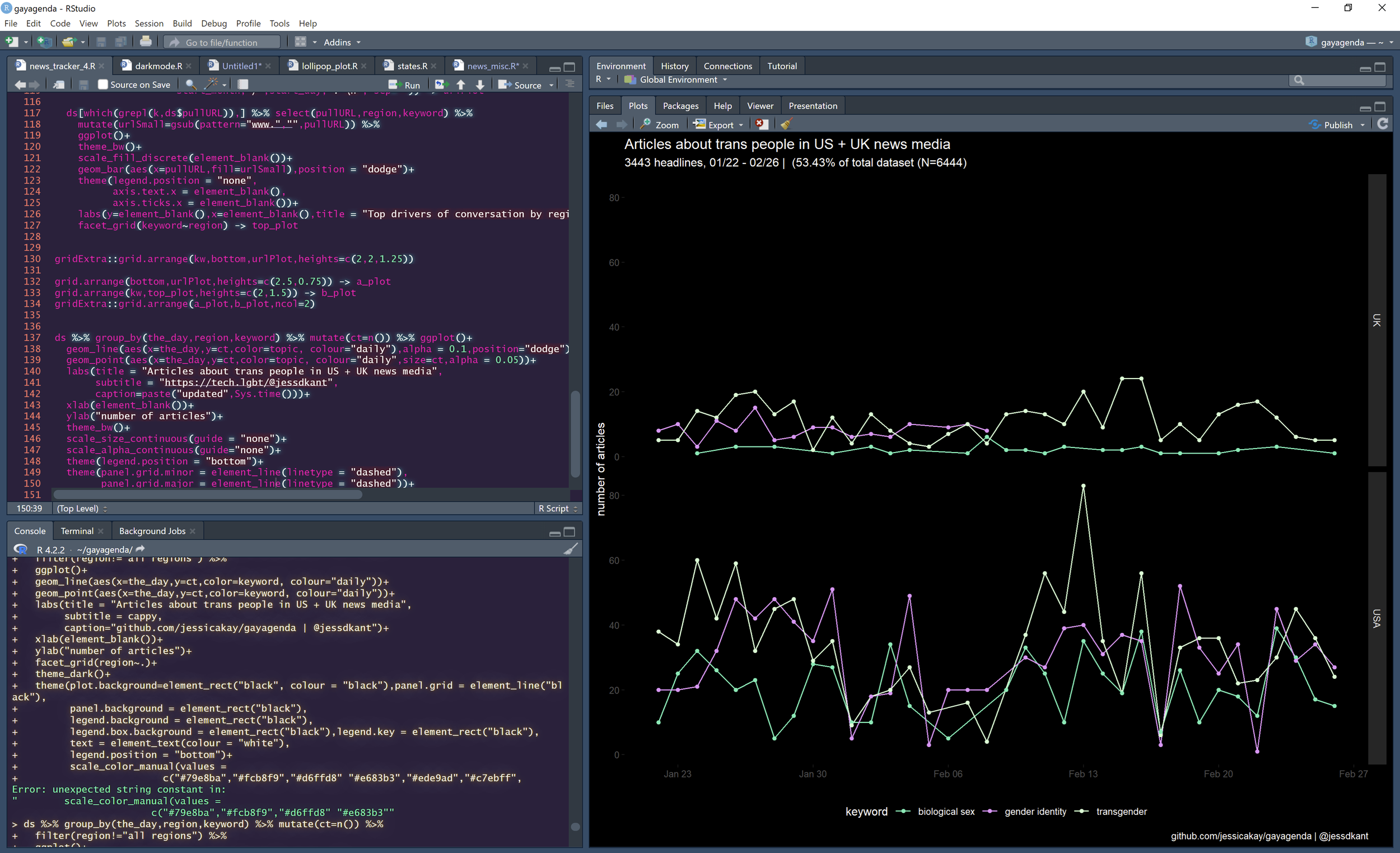
Well, I did it. I finally switched completely to a “dark mode” dashboard. I sort of had to, after downloading this absolutely gorgeous RStudio theme. Regardless, there’s something about seeing things slightly differently that affords you different perspective and I’m starting to get the impression that there is something truly, terrifyingly wrong with the way Google serves and curates news items in the index.
When I search for “google news content guidelines” I get the official Google News content policy where they claim that Google will not provide content for hate sites or sites that peddle disinformation (written here as misinformation). But is that really true?

getting the tracker online
As usual, the trans news tracker, started as one of those “I wonder if…” projects. Partially inspired by the potential imminent demise of twitter, and having recently started using automation platform IFTTT for tracking the hundreds of anti-LGBTQ bills sweeping the country, I wanted to see how easy it would be to create a dashboard that would visualize the discourse in real-time.